

From Margaret Atwood's MasterClass
Introduction
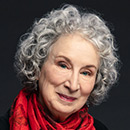
Meet your new instructor: Man Booker Prize-winning author Margaret Atwood. In your first lesson, Margaret shares her perspective on the art of writing and who ultimately gives your book its meaning.
Topics include: Introduction

Meet your new instructor: Man Booker Prize-winning author Margaret Atwood. In your first lesson, Margaret shares her perspective on the art of writing and who ultimately gives your book its meaning.
Topics include: Introduction
Preview
Creativity is one of the essential things about being human. You don't have to apologize for it. It's something human beings do. Sometimes people say, express yourself. I don't really think that that's necessarily the key thing. Expressing yourself can be shouting in a field. So rather than expressing yourself, why don't you think in terms of evoking, conjuring up for the reader some curiosity, some suspense, some interest rather than this is my ego? [CLASSICAL MUSIC PLAYING] If you're a writer, you have a very limited repertoire of tools. Your repertoire is a blank page and some words that you put on it. So you're not making a film. You don't have sound effects. You don't have actors. You only have those words that the reader is reading. And that's what you use to build everything in your story as words. Words on a page are inert. They're like black musical notes on a score. They're inert until the music is played, or in the case of a book, the reader is reading. And when the reader is reading, the words transform back into representations, sounds, smells, colors, people. Reading is the most participative of the arts. There's more brain activity when you're reading that kind of intense text than there is, for instance, when you're watching television, when you're watching film, because the brain has to supply everything with the words used just as cues, clues. So what you're providing the reader with is a score, a score that the reader will then interpret. And all you can do as a writer is make your book as good as it can be. You throw it out into the world, hope for the best. And that's all you can do. You can not dictate to the reader how they should read your book or receive your book. Because the meaning of a book, once it's is out in the world, is not decided by the writer anymore. Even if the writer has thought the writer was putting x meaning into the book, the reader may have quite a different idea, and usually does over time. So Thomas Hardy thought that "Tess of the D'urbervilles" was about the irony of fate, and we think it's a pretty kinky story about what happened to women in the Victorian period. I mean, that's what I think. What do you think? When I wrote "The Handmaid's Tale," I didn't give the central character a name. The readers decided that her name was June. There's nothing in the book that contradicts that. In fact, it all fits. But it wasn't something I thought up. The readers figured it out. It has to be June once you come to think of it, because each of the names that are mentioned in chapter 1, they all occur again in the book except for June. I thought that was pretty smart of them. I'm Margaret Atwood, and this is my MasterClass.
The art of powerful storytelling
Called the “Prophet of Dystopia,” Margaret Atwood is one of the most influential literary voices of our generation. In her first-ever online writing class, the author of The Handmaid’s Tale teaches how she crafts compelling stories, from historical to speculative fiction, that remain timeless and relevant. Explore Margaret’s creative process for developing ideas into novels with strong structures and nuanced characters.
Reviews


Margaret was a wonderful teacher with a charming way of imparting valuable lessons about the fundamentals of writing. Thank you so much.
Margareth is adorable, but there wasn't much technique taught here. It sounded more like a self promotion. I enjoyed it anyway.
I like Margaret Atwood, and I think she is a fantastic writer. I was happy to listen to everything she shared.

Loved Margaret Atwood's style. Relaxed, articulate, informative, and nuanced. After having written seven novels, I walked away wishing I had taken this course before I wrote the first. They no doubt would have turned out far better. Thank you.
Comments
I love the intro to this. It had me smiling from the beginning and even more eager to learn than I already was. Looking forward to more!
Yay! This looks like another winner. I've had mixed results with these classes and I won't stick with one past the first one or two lessons if I'm not intrigued or entertained. Some of the presenters do a much better job of keeping people interested than others. Great opener here. I want to hang out with this lady. If you're looking for other writing MasterClasses, I recommend James Patterson's and Dan Brown's classes - they also know how to engage an audience. Really looking forward to this one now!
Smart, unexpected, a little sly - of course - it's Margaret Atwood. Very much looking forward to the rest of this class.
I have enjoyed Margaret Atwood's perception about that reading makes more demands of a person than any other of the other arts. In the end she talks about throwing the book into the world and ultimately, it is the reader who gives the book meaning.
I enjoyed Margaret Atwood's perception that reading makes more demands of a person than any other of the arts. And of course she is right that readers may look differently at a work from the author, but I would like to write so clearly that the reader shares my meaning.
In Atwood's description of the writer evoking and conjuring stories for the reader, this is what I am wanting to do with my writing. In the end she talks about throwing the book into the world and ultimately, it is the reader that gives the book meaning. In my writing, I have my meaning and also each reader attaches their own meaning.
Atwood is enticing. It is no coincidence that the word Grammar derives from old French gramaire. This word then evolved into grimoire - a book of spells. The writer's job is to evoke and to conjur up. I'm excited to be mentored by Atwood to help me cast my stories into the world.
I think her creativity infects you through her smile. What she says is important but it is the empowering way in which she says it that makes you want to go on.
An evocative opening. Looking forward to entering a writing journey with Margaret.
Lesson Plan


 Secured with SSL

You know she's a story teller just by the way she speaks. I was able to visualize her words which really helped to solidify the ideas behind them. I loved how she likened the words of a story to the musical notes in a score.